
Objectors claim important victory in pylon campaign
Farmers and landowners objecting to SSEN’s TKUP 400kV overhead line proposals have won an important procedural victory after Scottish Government Reporters agreed to postpone a series of Necessary Wayleave hearings following detailed submissions made on their behalf.
The decision is a clear sign that objectors’ evidence is cutting through and that the Reporters have recognised the importance of the agricultural operations issues aired at last week’s hearing.
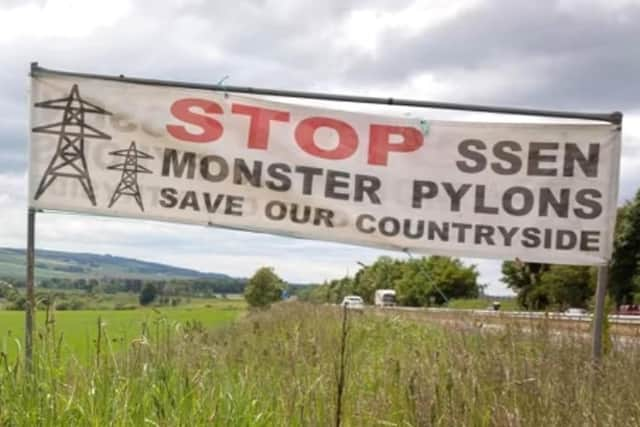

In correspondence issued by the DPEA, the Reporters said there was “significant overlap” between the matters discussed during the Agricultural Operations hearing sessions and the issues raised in hearing statements for a number of Necessary Wayleave cases.
Twelve Necessary Wayleave hearings have now been postponed, with new dates expected between Nove mber 11 and December 4 .
Significantly, those 12 cases relate to the Necessary Wayleave cases run by Galbraith where the same underlying argument regarding the safety of the OHL design has been raised in proceedings.
The postponement is a further setback to SSEN’s timetable and a strong indication that the Reporters consider the objectors’ agricultural and operational evidence too important to be rushed or dealt with in a fragmented way.
Dave Carnegie, who farms barley, wheat, oilseed rape and potatoes has been issued with a Necessary Wayleave from SSEN.
He said: “I am delighted that the Necessary Wayleave hearings have been postponed because the arguments regarding a design which prevents me from using a combine, sprayers and potato harvesters because SSEN are providing clearances of 10.3m over my property are the same as those in the current planning application.
“A combine requires at least 12.5m clearance to operate safely and this is an issue we raised very early on in consultations which SSEN have ignored.
“SSEN’s failure to take account of this in their engineering design means 5.8 acres of my farm will be sterilised.
“We should not have to incur further costs fighting the same issues until the planning decision is made.”
Although the Reporters confirmed that Necessary Wayleave applications can proceed concurrently with an application for section 37 consent under the Electricity Act 1989, they accepted that there would be clear benefit in postponing these hearings until final positions in the section 37 process are set out.
Their stated aim is to avoid repetition of evidence and ensure the wayleave process is handled efficiently.
Ian Thornton-Kemsley on behalf of Galbraith, said the decision was a major and justified intervention by the Reporters.
He said: “This is a very significant outcome for the farmers and landowners we represent.
“The Reporters have plainly accepted that the issues raised in our submissions in both the Necessary Wayleave procedure and that for the Section 37 are substantial, relevant and cannot be sidelined.
“For months objectors have been making the case that the agricultural and business impacts of these proposals are fundamental to the Necessary Wayleave decisions.
“The Agricultural Operations Hearing brought those issues into sharp focus and this postponement shows that the Reporters have listened.
“It is also a clear blow to SSEN’s attempt to press on with wayleave hearings before the wider section 37 issues have fully played out.
“Our clients were entitled to expect that the real effects on farming operations, land management and rural businesses would be properly tested and that is now exactly what must happen and this did not happen by accident
“It happened because farmers and landowners engaged, evidence was put forward in detail, and the strength of those submissions could not be ignored.”
John Campbell, NOTKUP Project Manager, said the decision should give confidence to affected farmers that their objections are having a direct effect.
He continued: “This is not a minor administrative adjustment.
“It is a direct consequence of the strength of the objectors’ case and the seriousness of the agricultural evidence that has been put before the Reporters.
“The message from this decision is unmistakable: the impacts on farming businesses are real, they are relevant and they must be properly considered before any compulsory rights are imposed over land.
“SSEN is seeking extensive powers over productive farmland and farmers are entitled to have the full operational consequences examined properly and in the round.
“The Reporters have recognised that point and acted on it.
“For objectors, this is an important demonstration that well-founded submissions can change the course of the process.
“It also underlines that the Necessary Wayleave cases being handled by Galbraith are only part of a much wider picture affecting many more farming businesses represented by other land agents.”
Parties have now been invited to submit supplementary hearing statements for each affected wayleave case by November 2 , with rearranged hearings and site inspections expected later in the year.
The Reporters have said they will continue work on their report to Scottish Ministers with the aim of submitting it by mid-December, so that both the section 37 report and the wayleave report can be before Ministers at the same time.