
Beaver population continues to rise in Tay catchment area

The beaver population in the Tayside catchment area is continuing to expand, according to Scotland’s largest ever survey of the species.
The survey found that in areas where the animals have been reintroduced, there are now 349 confirmed beaver territories and 56 possible territories across the survey area – a total of up to 405.
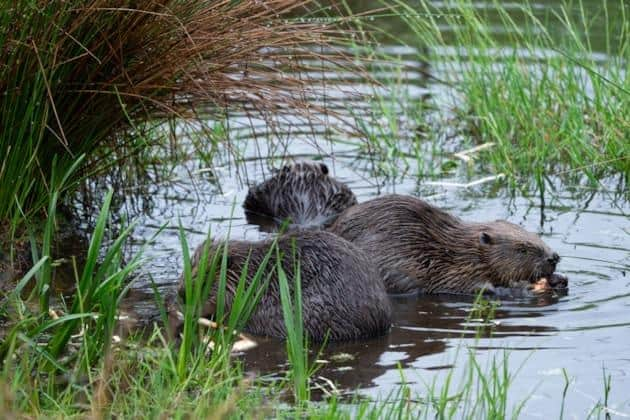

That marks a significant increase on previous surveys, which recorded 39 territories in 2012, rising to 114 in 2017-2018 and 251 in 2020-2021.
The fieldwork, which took place in 2024–2026, covered 2,397km of watercourses including rivers, burns, lochs and drainage systems.
Experienced surveyors searched for signs of beavers on foot and by canoe, finding 20,853 confirmed signs such as burrows, dams, lodges, scent mounds, canal digging, and tree and crop feeding.
Because the size of beaver family groups can vary, the survey does not provide an overall population figure, however, the findings confirm that the species is continuing to do well, expanding in range and moving into new areas.
Beavers have become established across the Forth and Fife regions, along the shoreline of the Firth of Tay and in the South Esk and Clyde river catchments.
In the Tay and Forth areas, where beavers have been present for longer, field signs indicate that gaps between previously established territories are now being filled.
Most activity occurred in waterside woodlands (50%), with agricultural land the second most common area for activity (28%). This is a shift from 2020–2021, when most was recorded on agricultural land, followed by waterside woodlands.
The survey was a partnership between NatureScot, Beaver Trust and the University of Exeter.
Dr Roisin Campbell-Palmer, head of restoration at Beaver Trust, said: “We’re proud to have carried out what may be the largest survey of beaver activity ever undertaken.
“It’s encouraging to see the population growing and beavers establishing themselves in new areas. At the same time, we are seeing a slowing of population growth compared with previous surveys as the core catchments become more occupied, with natural and human-made barriers limiting movement into some new catchments or sub-catchments.”
Dr Roo Campbell, NatureScot mammal adviser, added: “It’s particularly interesting that more dams were recorded relative to the population size, perhaps an indication of beavers moving into less agriculturally dominated landscapes and smaller burns.
“The wetlands these dams create are important for biodiversity and valuable to us because they can alleviate flood and pollution risk downstream. To gain these benefits we need to adapt to live alongside beavers throughout our waterways.”
The Scottish Beaver Advisory Group has recently launched an information pack to help everyone in Scotland learn more about living with beavers. The pack has a particular focus on helping people in areas where beavers are moving into understand what to expect.
The information pack is available at www.nature.scot/scottish-beaver-advisory-group-sbag-resources.