
New display room for Aberlemno Pictish stone to open this weekend
One of Angus’s newest archaeological treasures will go on display this weekend with the opening of a dedicated room in Aberlemno Village Hall.
A carved Pictish stone discovered during an archaeological dig near the village will be unveiled to the public on Sunday.
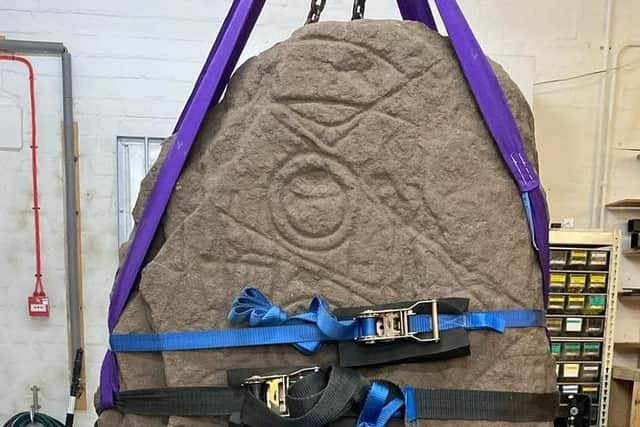

The discovery, made during an archaeological dig, sent ripples of excitement through the archaeological community as it was one of only a handful discovered during excavation.
The archaeologists came upon it while digging a test pit for surveys to try and build a greater understanding of the important Pictish landscape of the Aberlemno area.
The archaeologists were conducting geophysics surveys of the ground early in 2020 when they found anomalies which looked like evidence of a settlement.
They dug a small test pit to try to find out if there were building remains, and, to their surprise, found the carved symbol stone.
It is one of only around 200 known.
But, due to Covid, the archaeologists had to sit on their discovery and wait two years before they could return to verify the find.
The stone is thought to date from the 5th or 6th centuries, and had been incorporated into a later building, possibly some time between the 11th and 13th centuries as a paving stone.
It was removed from the site by the team from Aberdeen University to be studied and conserved.
Now known as Flemington 2, the stone has been returned to the village for display within the village hall, adding to the community’s already famous collection of Pictish stones.
The move is the result of collaboration between the university, Pictish Arts Society, ANGUSalive, with support from the UK SPF Angus Community Asset Capital Grant Fund.
A spokesperson for the village hall committee said: “We are pleased to announce the opening of the Flemington Room at Aberlemno Village Hall. This events offers a unique opportunity to view this remarkable ‘new’ carved stone up close and engage with the individuals who played a pivotal role in its discovery and installation.”
The Flemington Room will be open between 12pm and 3pm.