
Shipping Lines - When fleets of Clyde puffers traded to the east coast
Although often inaccurately described as Clyde puffers, these steam lighters often used the Forth and Clyde Canal as an important waterway to access ports along the east coast from Stonehaven south to Berwick-upon-Tweed, writes John Aitken.
This man-made route, of course, had advantages and disadvantages, mainly due to the dimensions of the numerous locks which prohibited ships of a greater length of 65 feet.
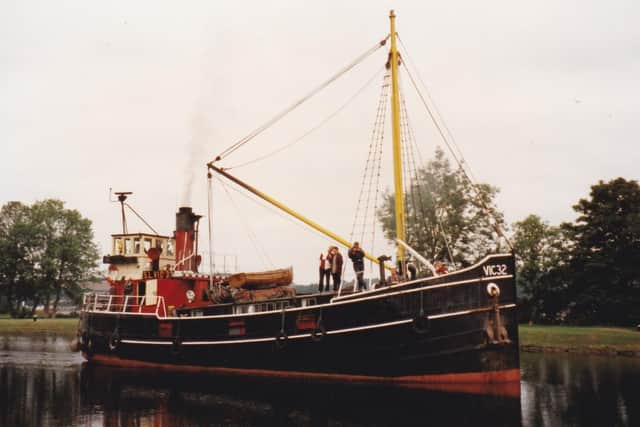

Searching through the Arrivals and Departure Books for the port of Montrose for the years covering and immediately after World War One and into the 1920s, there are quite a number of “creeds” and “tribes” listed arriving with a miscellany of cargoes, returning west with barley from the rich farmlands of Angus and the Mearns to distilleries in Kintyre and the Western Isles.
The firm of J. Hay & Sons, based in Kirkintilloch, were puffer owners and also builders, although having only one building slipway. It was their fleet that were prominent in canal and near coastal traffic with names such as Gael, Briton, Serb, Cossack, Tartar and Druid etc appearing in the Montrose registers. Having their own shipyard, they were able to build and repair vessels of their own fleet in addition to other puffers.
They concentrated on steam propulsion, whereas their close neighbours Peter McGregor & Sons, located at the Railway Basin with the availability to build five ships simultaneously, were competent to construct tugs and other types of craft. They experimented with the new-fangled oil engines receiving multiple orders from the Coasting Motor Shipping Company of Glasgow.
These new types of engines were mainly supplied by Kromhout of Amsterdam, Bolinder of Stockholm and the Scottish industrial group Wm. Beardmore Ltd of Glasgow. My interest in this early era of coastal ship owning was why the Dutch and, to a lesser extent German, family or captain-owned coasters took so much of the coasting traffic around the British coast or rear Continent when this relatively early venture had been set up with Scottish capital. The Germans, of course, had gained experience of oil motor-driven vessels due to their experience with U-boats during World War One.
While on the subject of this type of coastal lighter, one of the few remaining afloat is the Basuto, currently languishing at Ellesmere Port Boat Museum alongside the Manchester Ship Canal.
Built at Port Dundas in Glasgow by William Jacks & Co in 1902 for their own use on the Forth & Clyde Canal, in 1919 she was sold to a coal merchant in Belfast then later to a firm in Widnes.
She then had her boiler and engine removed and was used to transport sand and gravel, being classed as a dumb barge.
Spending some further time recently browsing through the Arrivals and Departures Books, the riverside quays and Wet Dock must have been busy areas of activity, with large numbers of small ships, with some still under sail.
Around a century ago much employment would have been generated, especially during the potato exporting period, with numerous recipient ports around the JK coastline listed.