
Traditional Angus roofs are now at significant risk

A once common feature of buildings across Scotland sourced in Angus is in decline, according to Historic Environment Scotland (HES).
The heritage agency has published an audit report of Angus flagstone roofs, which shows that only around 240 buildings across the country have been identified as retaining the once-common feature.
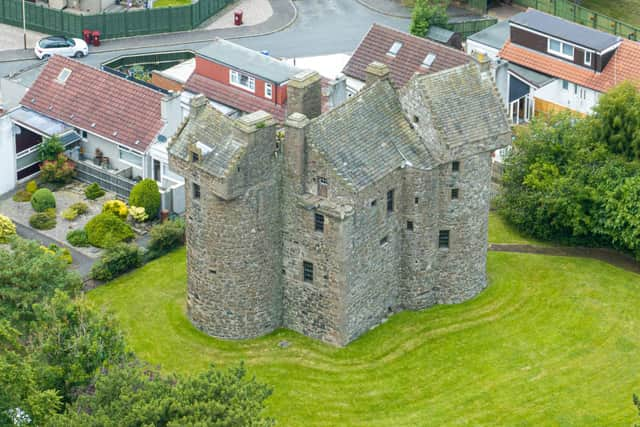

Stone is a signature material for Scotland, contributing to national and local identities, tourism and economy, but many stone features – such as Angus flagstone roofing – are at significant risk of being lost forever.
Angus flagstone was once quarried extensively across the county and was renowned for its ability to split naturally into durable, flat slabs – perfect for roofing, paving, and walling.
It was a cornerstone of architecture within Angus and formed part of the region’s historic identity.
However as regional quarrying stopped and new flagstone became harder to come by, many of these buildings lost their original roofs as material was transferred to other properties.
Today, fewer than 200 buildings in the county itself are known to retain this flagstone roofing.
The audit report also highlighted notable examples of Angus flagstone roofs still standing.
One such example is the Davidson Cottage, a traditional cottage with links to the Davidson family – best known for emigrating to the United States and founding the Harley-Davidson Motorcycle Company.
The Davidson Cottage, at Netherton, near Brechin and originally built in the 1720s, stood in disrepair until it was taken over and restored between 2008 and 2012.
It is now in the care of a charity and is visited frequently by Harley-Davidson enthusiasts from across the UK and the world.
The loss of Angus flagstone roofs also threatens the survival of the specialist traditional skills required to maintain them.
HES is investing in traditional skills training, which has previously been described as an “emergency”, and is working with Scottish Canals on the Lock 16 Centre of Excellence for Canals and Traditional Skills, which will support the development of specialist skills.
Colin Tennant, interim director of cultural assets, said: “This audit shows just how vulnerable Angus flagstone roofs have become, and how urgently they need support.
“Historic building features like this tell a social and geographical story of the region, the way of life at the time, and the skills needed to create and maintain them.
“All of these aspects of this built heritage are at risk of being lost.
“Through research like this audit, we get a clearer picture of Angus’s built heritage and learn more about its history.
“Only a fraction of these roofs are still standing today, and it is clear that an urgent and coordinated approach is needed to further document and conserve them.
“That’s why we’re exploring how we can work together with local partners and suppliers to safeguard these flagstone roofs so that they can be cherished as part of Angus’s legacy as well as its future.”
The publication can be found on the HES website.