
Heart rocedure is the first of many for Ninewells

A cutting-edge procedure for those suffering from the heart condition atrial fibrillation has been successfully performed for the first time at Ninewells Hospital.
The cryo-balloon pulmonary vein isolation procedure took place at the hospital earlier this month.
NHS Tayside aims to deliver up to 150 of the procedures annually, expanding access to advanced arrhythmia treatment for patients across Tayside. Previously, patients and the medical team had to travel to Edinburgh Royal Infirmary.
Atrial fibrillation (AF) is a type of heart rhythm problem where the patient’s heartbeat becomes irregular. It can often be treated with medication, however, in some cases symptoms can be treated with an ablation procedure to burn or freeze part of the heart.

Pulmonary vein isolation is used to limit abnormal electrical signals in the heart that can cause AF. This occurs when abnormal electrical impulses fire into the atria. These override the heart’s natural pacemaker, which can no longer control the rhythm of the heart – causing an irregular heartbeat.
This new procedure uses cryo (cold) energy to destroy this area of tissue and form scar tissue. This scar tissue blocks the extra electrical signals from the pulmonary veins reaching the left atrium, so it no longer generates or conducts fast, irregular impulses.
The cryo energy is applied via a balloon to the entrance of a pulmonary vein. It is usually performed under local anaesthesia with sedation.
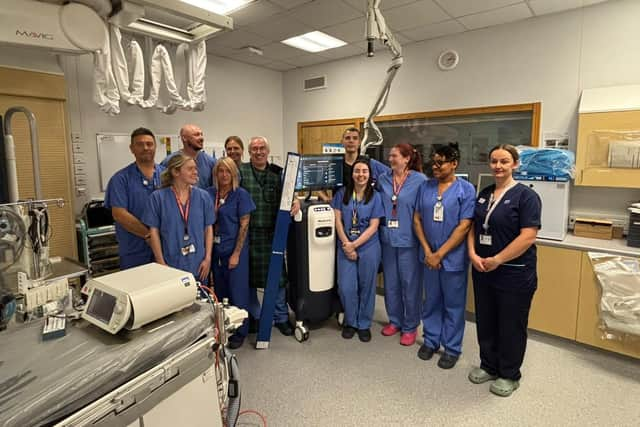
Led by Dr Douglas Elder, charge nurse Danielle Burgess, lead physiologist for Cardiac Rhythm Management, Scott Ferguson, Dr Alan Robertson and their multidisciplinary cardiac rhythm management team, this achievement reflects years of planning and collaboration across departments.
The inaugural patient, Dr Ronald MacWalter, was also the first patient to undergo cardioversion – a procedure carried out to restore an abnormal heart rhythm - at Ninewells in the 1970s.
Consultant cardiologist Dr Douglas Elder, said: “We’ve been carrying out these procedures for around 10 years; however, the team and the patients have been travelling to Edinburgh for them. This approval now means less travelling for patients and the added stresses that brings, as well as increasing the capacity for this procedure in Tayside.”