
New reports sets out estates' contribution to Angus economy

Seven estates in the Angus Glens contributed £6.6m to the economy last year while supporting hundreds of rural jobs, local businesses and biodiversity work, according to a new report.
Published by the Angus Glens Moorland Group and Scottish Land & Estates, it sets out for the first time a comprehensive evaluation of the economic, environmental and social impacts of moorland management across seven estates during 2025.
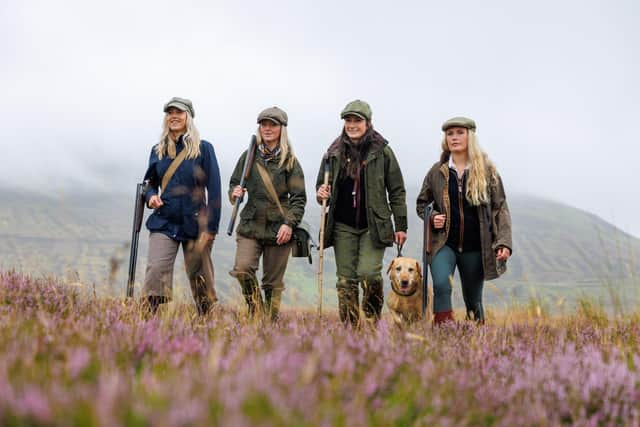

The publication comes at a time when rural communities, biodiversity recovery and wildfire resilience are high on the public policy agenda, and its findings show that active moorland management in the Angus Glens is already delivering practical outcomes across all three.
Among the findings, the estates provided 86 full-time and 768 seasonal jobs, 68 homes in rural areas, annual expenditure of £6.6m, of which £3.66m was spent on employment costs and £2.94m on contractors, goods and services.
The vast majority of expenditure on goods and services – 82.5% – was with local businesses.
There were 84 grouse shooting days during the 2025 season, with 54 seasonal employees required on average, per shoot day per estate, reflecting the importance of the grouse sector to seasonal work in the county .
The report also demonstrates a diverse ecosystem with abundant native wildlife. Detailed ecological monitoring on one estate recorded 102 bird species, 145 species of butterfly and moth, 19 mammal species and 146 plant species.
Widely distributed across the landholdings are 16 species of bird of prey, the most common of which – White Tailed Eagle, Golden Eagle, Buzzard, Red Kite, Peregrine Falcon and Kestrel – were recorded on every estate.
Key upland species include Curlew, Black Grouse, Skylark, Lapwing, and Oystercatcher.
Ross Ewing, director of moorland & strategic projects for Scottish Land & Estates, said: “Upland estates in the Angus Glens are creating jobs, providing homes for rural workers, supporting local businesses and enhancing the natural environment.
“With the right support, the Angus Glens can continue to be a stronghold for biodiversity, a driver of economic activity and a model for integrated land management.”
Dawn Black, Angus North and Mearns MSP , added that the report demonstrates the “enormous contribution” that responsible moorland management makes .
She said: “The evidence presented here shows that these are not single-purpose enterprises, but multi-functional landholdings delivering real benefits for people, rural communities and nature.”
Iona McGregor, regional co-ordinator of the Angus Glens Moorland Group, also said the report highlights how integrated land use provides this wide range of benefits.
She said: “Many people have the impression that all the land is dedicated to country sports but in fact a wide range of activities are undertaken, from woodland creation to biodiversity enhancement, farming and sustainable tourism.
“This varied land use provides opportunities for job creation and helps ensure the right balance of economic activity with active conservation and community access for leisure pursuits.”
One business owner who has felt the benefit of the economic spin-off is Maryton Garage, near Kirriemuir, run by Steve Mitchell.
He said: “The estates here are fantastic for the area, loads of local businesses benefit.
“We service all the estate vehicles, the gamekeepers’ vehicles and 4x4s for guests who come for the shooting season. It’s a big part of our business.”
Seven estates contributed to the report, with 54,715 hectares of land under management in all.
The estates invested £114,087 in track maintenance during 2025, supporting land management, emergency vehicle access, recreation and research.
Partnership working was also a key element in the report, with dozens of schools, charities, and local organisations accessing the land for leisure purposes, education and training, or to monitor wildlife, including ecological research which is being conducted by four Scottish universities.
Mr Ewing added: “The message from land managers is that they can continue to deliver these benefits, as long as the policy direction is clear and there is backing for practical measures which have proved successful – such as wildfire prevention practices and habitat management.
“The opportunity now is for decision makers to recognise this contribution and build on best practice.
“This is a shared opportunity to develop Scotland’s strengths for the future.”